

Are Pro Tennis Players Miserable?
A conversation with The Cruelest Game author Matthew Futterman.

The bright lines and neat rectangles of a tennis court can’t contain the messy human experience happening between them on pro tours. “Why are so many players miserable?” Matthew Futterman asks in his new book, The Cruelest Game: Chasing Greatness in Professional Tennis (Doubleday), out today.
Over his years covering tennis for The New York Times, Futterman has noticed that top players cry, crack and even quit at a rate that must be (unscientifically) higher than most sports. Plenty of players are unstable by the time they reach the pro tours, but even well-adjusted players aren’t immune. Why was Coco Gauff crushed after winning her 2025 US Open fourth-round match at an event that showers her affection? What does living in Andre Agassi’s shadow do to the American men who aren’t the unicorn Agassi was? The list goes on.
Or rather, the stories and Futterman’s analysis go on for 329 pages, much of it taking the reader behind the scenes of the sport. Futterman reports on exclusive interviews at Naomi Osaka’s L.A. house, where she works with a ballerina; over a giant dinner with Novak Djokovic at the US Open; in an SUV with Agassi stuck in New York City traffic; to a posh Greek resort where agencies scout the world’s best under-12 players.
Newsletter Megan talked with Matt before the book’s release today.

Megan: Was “why is it so hard” a question you needed to answer for yourself, or did you already know the answer after all these years around the sport and felt like nobody was asking players about it?
Matt: It’s a question I needed to figure out. It doesn’t happen in other sports. Steph Curry did not quit basketball when he was 28 and winning championships for the Golden State Warriors. Tom Brady did not quit when he was rolling off Super Bowls with the Patriots because it was just too much for him. Golfers generally don’t quit -- so it’s not necessarily an individual-sport thing.
Megan: Why is it a phenomenon in tennis?
It’s such a hard sport on so many levels because of the dynamic from the time you’re a small child, and what it means to commit yourself to it. I use the word “cruelty” slightly glibly, but it begins really early.
Megan: Was it tricky to get players to talk about it?
Matt: Yes and no. As soon as you ask a player, “Why is this so hard? What’s the struggle here?” -- and you do it with a bit of empathy -- they’re pretty good at talking about it.
Megan: Did you feel like you arrived at a satisfying answer?
Matt: Yeah, because you hear all these stories. Why is it so hard for Zheng Qinwen? Because her parents abandoned her when she was 6 years old [at a tennis academy in China, which they said they were visiting for just the day before leaving her there]. I told Tommy Paul that story and he said, “Why aren’t they in prison?” And he was serious. It launched him into this whole rant about the parents he had seen. He said, “I would win matches, and then I would see a parent take his kid behind a tree and smack him around. I saw that.”

Then there’s Novak Djokovic being fully aware that his parents took the advice of his teacher, Jelena Genčić, who said, “Put all your money on this one,” and Novak carried that burden from the time he was 11 years old. Then you get to the physical part of it, and Stefanos Tsitsipas saying, “What other sport is there where you need the lungs of a marathoner, the speed of a sprinter, the flexibility of a gymnast and the hand-eye coordination of a .350 hitter in baseball? Show me another sport.”
Megan: When you put it like that…
Matt: And then there’s the loneliness of it.
🎤 Matt Futterman
“There are a lot of tennis players walking around who don’t seem that happy. I think there are a lot of danger spots in the growth of a tennis player.”
Megan: You also include amid the challenges that players are handed a definition of success that almost nobody can meet -- Slam or bust.
Matt: It’s drilled into you from the beginning that the definition of success is being No. 1 or winning a Grand Slam, and there aren’t very many people who get to do that. So you have Madison Keys, who has had a perfectly excellent career, made millions of dollars, camped out in the top 10 -- and she was nearing 30 thinking she was basically a failure and was struggling to separate her identity from her results. Or Taylor Fritz, who has been as high as No. 4 in the world and will be the first one to tell you, “If I don’t win a Grand Slam, I haven’t really done shit.”
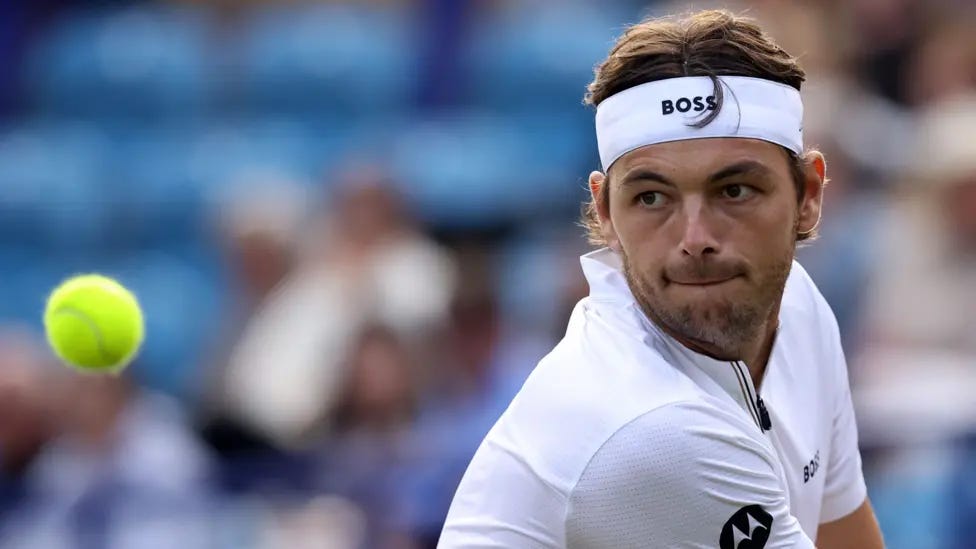
If you’re the fourth-best player in the NBA, you are making $60 million a year, you are first-team All-NBA, you are a Hall of Famer. Life is pretty good.
Megan: It doesn’t help that players are hurt all the time, either.
Matt: That’s another reason why it’s so hard: the season is so long. Every other professional athlete gets three to four months off during the year. And it’s not just the physical toll. It’s the sense, except among the very few, that even if you make it to the top, falling off the top feels so much worse than being on top ever felt good. Being No. 1 is not that comfortable, because there is only one way to go -- down. And you’re hunted.
Megan: One person you didn’t go deep on is Roger Federer. Was he just better adjusted?
Matt: I didn’t go deep on him. My friend Chris Clarey (another tennis journalist) has gone very deep on him, David Foster Wallace went very deep on him, and by the time I started this, Roger had retired. There are snippets. I got to watch some tennis with him at Laver Cup last year.
But yes, I think there are some people and some players who have a gift for enjoying it and embracing it and experiencing it in a certain way. Roger is very comfortable in his own skin and in his life. It will be interesting to see how Coco handles it if she gets to No. 1 and hits a period where she is more consistently dominant, because she seems so comfortable with herself in any setting.
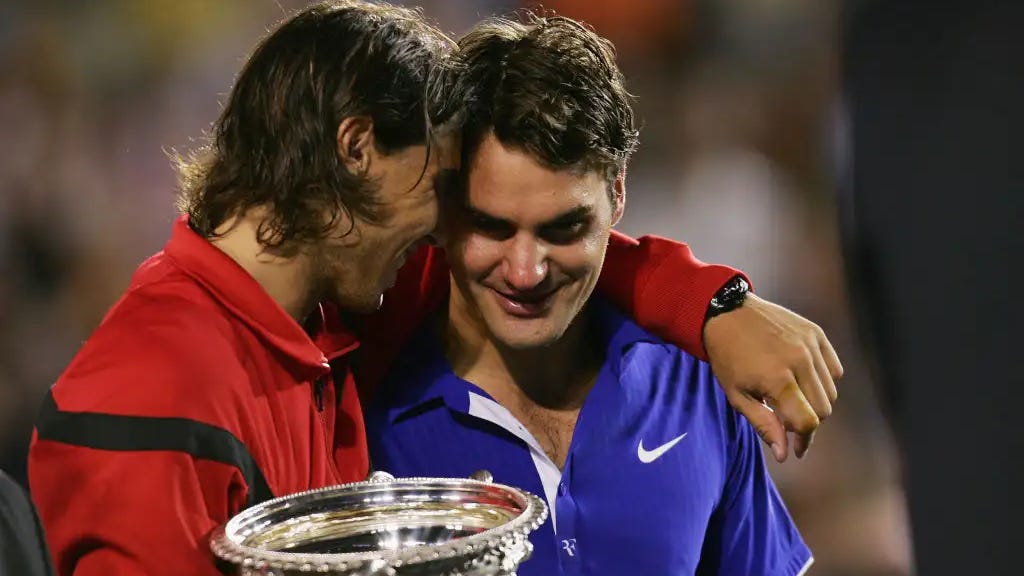
Having said that, you don’t have to search very far to find the period when Nadal overtook Roger. At the trophy ceremony in Australia -- I think it was 2009 -- his words were, “It’s killing me.” He had lost the French, Wimbledon and then Australia, and it did sneak out. He lost his grace at moments, like with Djokovic at the 2011 US Open semifinal, when he said Djokovic was just lucky hitting that shot.
Megan: I always thought it was the audacity of Djokovic going for it that Federer couldn’t stand. That it worked.
Matt: Yeah, but also pull the lens back a little. He is getting on 30 at that point. He realizes he has been knocked off the perch by one guy, and now here is this other guy, and he has to know on some level that this guy is better than me now, and he is going to start beating me more than I beat him. Nobody gets out completely intact. And Roger misses it terribly, too.
Megan: How so?
Matt: He is at peace with the fact that he had his great time, and it was wonderful, and he wouldn’t change a thing, except maybe not getting injured at the end. But he still itches to get out there. He says in the book, “How cool would it be to go out there and play a really intense match right now?”
Megan: That surprises me, because the way most of the stories in the book go, you would think they would be thrilled when it’s over.
Matt: Some of them are. I was talking to one of the guys who runs a big agency, and he said, “Most players hate tennis. They’re sick of it. They just want to get what they can out of it, make their money, get out and go on with the rest of their lives.” When they are in it, they may feel that way at times, because it is really hard.
But if you’re a top player, you’re going to have to come to terms with the fact that the biggest thing you’re going to do in your life -- separate from raising a family; I mean the most public thing, the thing that gets the most people excited -- is behind you by the time you’re, what, 34? And you’ve probably got another 50 years on the planet. How do you fill a day?
Megan: Is almost every player traumatized in some way?
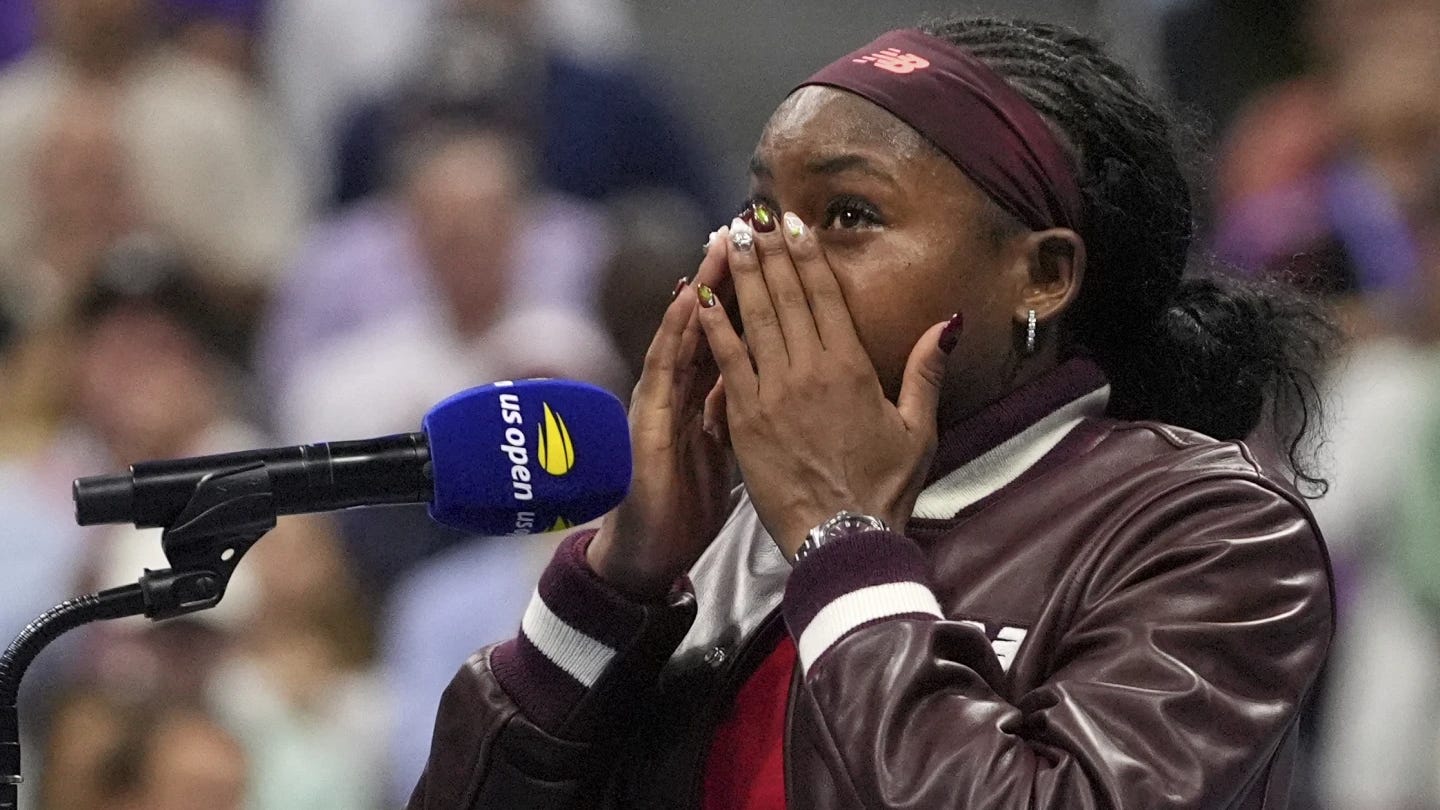
Matt: Sure. That’s my experience of it. If you asked me who is seemingly the most well-adjusted player, Coco would be at the top of my list. But 11 months ago, she couldn’t get her serve over the net and was breaking down during a post-match interview. That was hard to watch. It was painful. And she’s Coco -- she’s the queen of the tournament, the belle of the ball, a two-time Grand Slam champion at that point and still crushed, experiencing this kind of life crisis.
Megan: Do we need to worry about Jannik Sinner?
Matt: Jannik Sinner will tell you how hard it was when he was 16, 17, and his father is a cook and his mother is a waitress, and he knew exactly how much money they had put into him. He had this constant mathematical equation running in his head. It wasn’t until he won Next Gen and got some money and could cover his expenses himself that he said, “OK, now I can stop breaking rackets and losing my temper.” He says that’s why he is calm on the court -- once he got his parents out of debt, once it was no longer on them, everything else was easy.
Megan: It’s pretty serious to say tennis is inherently traumatic, as you have.
Matt: I think it’s a problem that there are a lot of tennis players walking around who don’t seem that happy. I think there are a lot of danger spots in the growth of a tennis player.
Megan: Starting very young, too.
Matt: The sport has created an ecosystem where it seems like you need to specialize from the time you’re very young. Not go to regular school, go to an academy, leave home, all of that. I think that can be pretty traumatic.
The Tsitsipas family seems to have landed itself in a pretty unhealthy situation. So some of this is unique to tennis, and some of it isn’t.
Megan: Are there players who come through it well adjusted?
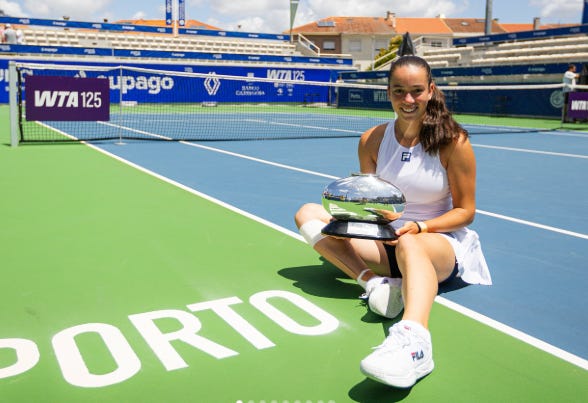
Matt: The Czech women. Most of them seem to go to normal school. A lot of them stay at home, they play in clubs. I met Tereza Valentova a couple of years ago, and she said, “I’ve got my finals going on right now at Roland Garros. I’ve got to get back to class.” The Czech women seem to have something of a normal-ish approach to it. So it’s not everybody. But it’s a lot of people.
Megan: How does someone read this book and still feel okay about supporting the sport and rejoicing in it?
Matt: Cognitive dissonance is a very powerful thing. I still watch and love football.
Megan: Despite the concussion problem, you mean?
Matt: Right. I don’t think being a fan of a sport makes you complicit in its sins. I think it depends on your involvement. If you have a kid who plays, if you play yourself, be an agent for good. Set a good example, encourage good behavior. For me, when Zheng Qinwen told me her story, I wrote about it. I said: This is not good, this is not normal. I think it’s good to be aware of what’s going on. But I don’t think you are causing harm to some 8-year-old in Florida by watching the D.C. Open.
Megan: Does the sport need to do anything about all this?
Matt: I don’t know what could be done. All the data says you have to start really young. ✹
As Matthew Futterman highlights, the relentless pressure and isolation of elite tennis take a massive psychological toll. A reminder of why mental performance resources and early holistic support are critical!!